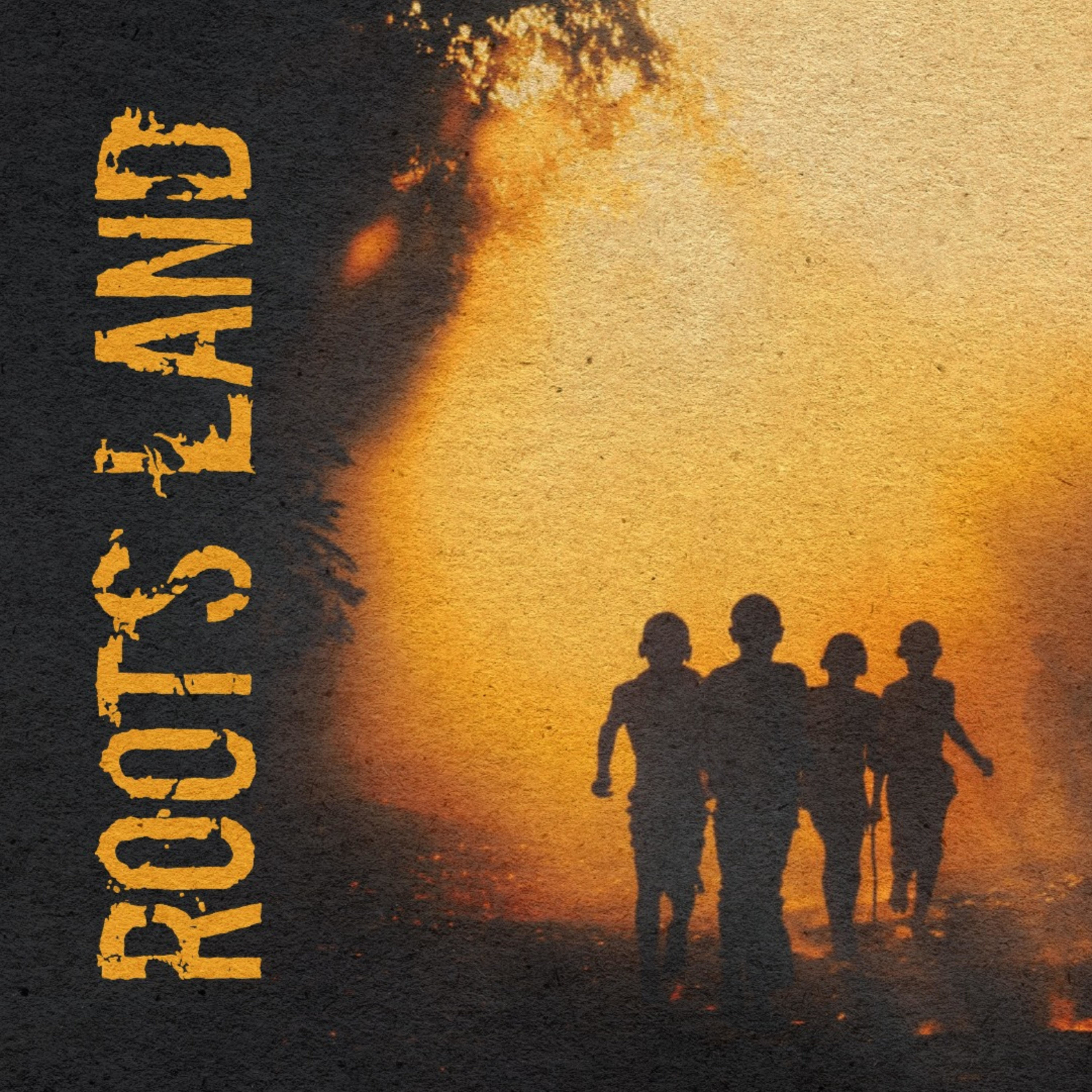
"What Remains" The Final Cut
In this episode of Rootsland, Henry K connects a sumo wrestler in Japan, Bob Marley in Miami, and the quiet reality most of us eventually face.
After watching the retirement ritual of Yokozuna Terunofuji — where a lifetime of discipline ends with the cutting of a top knot — Henry is reminded of another private moment decades earlier, when Bob Marley made a deeply personal decision at the end of his life.
From Kingston yards to forgotten musicians, from champions to the ones who never made the top division, this episode reflects on what remains when titles fall away and the crowd goes home.
Most of us don’t retire as legends.
We go back home.
And somehow, the dignity is just as real.
Support the Rootsland Team https://rootsland.captivate.fm/support
Produced by Henry K in association with Voice Boxx Studios Kingston, Jamaica
Listen out for Henry K's upcoming appearance on Hippie-Fari Reggae Radio & Podcast | iHeart
ROOTSLAND NATION Reggae Music, Podcast & Merchandise
Fundraiser by William Brawner : Rebuilding For The Future In The Wake of Hurricane Melissa
Produced by Henry K in association with Voice Boxx Studios Kingston, Jamaica
Closing Song: "One Day at a Time" Sugar Black & Lehbanchuleh
Transcript
The guy's righteousness, Governor.
Speaker B:Broadcasting live and direct from a magical place at the intersection of words, sound and power, the Roots Land podcast.
Speaker B:Stories that are music to your ears.
Speaker B:Congratulation, Henry, on the hundredth episode of Roots Land.
Speaker A:Thank you, Sia.
Speaker A:And thank you to our Roots Land family for sticking with us.
Speaker A:So long.
Speaker B:Number 100.
Speaker A:Actually, 101.
Speaker A:There's a secret episode that I removed.
Speaker B:Really?
Speaker B:I didn't know that.
Speaker A:But since this season is called what Remains, we'll talk about that at a later date.
Speaker B:Okay, thank you, everyone, for your loyalty, for your support, for your kind words, for tuning in every week.
Speaker B:Is it every week?
Speaker A:You really don't know how often we put out the show, do you?
Speaker B:Yeah, I do.
Speaker B:It's every other week.
Speaker A:Yeah, every two weeks.
Speaker A:Good.
Speaker A:Thank you.
Speaker B:Yeah.
Speaker A:So by now, many of you have probably heard the clip of Gene Simmons, lead singer of kiss, weighing in on whether hip hop belongs in the Rock and Roll hall of Fame.
Speaker A:And we've been getting a lot of emails and comments asking for my response to the situation.
Speaker A:So I'm gonna play the clip followed by my thoughts.
Speaker C:It's not my music.
Speaker C:I don't come from the ghetto.
Speaker C:It doesn't speak my language.
Speaker C:And I said in print many times, hip hop does not belong in the Rock and Roll hall of fame.
Speaker A:Well, Mr. Simmons, with all due respect, we do come from the ghetto, but like so many others, we forgot the language.
Speaker A:You see, you were born Chaim Veitz, son of a Jewish Holocaust survivor, an immigrant kid raised in Queens by a mother who lived through the Nazi camps.
Speaker A:And that's crucial to this story, because the word ghetto didn't begin with music.
Speaker A:It began with walls.
Speaker A: In the: Speaker A:A place you didn't choose to live, but you learned how to survive.
Speaker A:And I know that story personally.
Speaker A:I'm also the son of a survivor named for a grandfather taken to Auschwitz and never came home.
Speaker A:So when I hear the word ghetto, I don't hear a genre.
Speaker A:I hear a condition.
Speaker A:A place people are pushed into and then create a life anyway.
Speaker A:And after spending three decades living and producing music in Kingston, Jamaica, it turns out that most of the people that taught me anything meaningful about life came from zinc fenced yards and concrete tenements.
Speaker A:People who didn't choose where they were born, but chose what they became.
Speaker A:And remember, rock and roll came from the blues, and the blues came from chain gangs, sharecropperfield, Jim Crow and hip Hop burnt buildings, broken schools, kids raising each other because the system told them they were not good enough to succeed.
Speaker A:And yes, hip hop came with ugly, with anger, with contradictions.
Speaker A:But so did the blues.
Speaker A:So did early rock.
Speaker A:So did reggae.
Speaker A:And what I learned from those gullies and trenches in Kingston is that you don't get beauty without first surviving the wreckage.
Speaker A:Rock and roll isn't about guitars versus turntables.
Speaker A:It's about rebellion.
Speaker A:About revolution.
Speaker A:Bout resistance.
Speaker A:And you don't have to enjoy hip hop, but you can't deny it comes from the same root as rock and roll.
Speaker A:People with no power.
Speaker A:Making something loud enough to be heard.
Speaker A:During the lockdown, right before we launched the show, I stopped watching news.
Speaker A:Everything felt loud and obnoxious.
Speaker A:Every conversation felt like it had an agenda, as I've said before, to escape, I started watching nhk, Japan's international television station.
Speaker A:I didn't understand most of the language, but I just loved the pace.
Speaker A:Nothing felt rushed.
Speaker A:No one was shouting.
Speaker A:Just cameras lingering on city streets, rural kitchens, ancient temples, trains arriving exactly on
Speaker B:time, far from the outside world.
Speaker D:A village in the clouds.
Speaker A:And for an hour or two each night, it felt like the world slowed down again.
Speaker A:Except for one thing.
Speaker A:The sumo wrestling tournaments.
Speaker A:That was the only time the calm broke.
Speaker B:You know, Henry, I never could get why you were so into that sport.
Speaker B:Seriously, they can really get hurt.
Speaker B:Actually, they do get hurt.
Speaker B:People that size, when they hit the ground, the force that they hit the ground with, it's bone crushing.
Speaker B:It's devastating to watch.
Speaker A:I understand that.
Speaker A:But I guess I just see it as more than a sport.
Speaker A:The chanting, the drumming, the deliberate slowness.
Speaker A:Takes you back to an ancient place, shows some things are worth preserving, handing down to a next generation.
Speaker A:You see kids in the audience brought by their parents, grandparents waving banners, cheering for their favorite sumo.
Speaker A:That's when I started following a wrestler named Terina Fuji, a Mongolian kid that came to Japan as a teenager.
Speaker A:He learned the language, learned the culture, learned the discipline, had a successful career early on, won a championship.
Speaker A:And then everything collapsed.
Speaker A:A catastrophic knee injury.
Speaker A:The kind that ends careers.
Speaker A:And most people would have just walked away.
Speaker A:But instead, Terano Fuji took the humiliation of dropping down to one of the lowest divisions.
Speaker A:And then slowly, painfully, he fought his way back up.
Speaker A:Through injuries, through diabetes, through disqualifications, through doubt.
Speaker A:And that's when I tuned into his career and watched the kind of comeback you only hear about in myth, in cultures that still believe in honor and endurance.
Speaker A:I watched as Teranofuji won championships, reaching the highest Rank in the sport, a yokozuna.
Speaker A:Watching Terano Fuji step up and accept his trophy.
Speaker A:With knees supported by hinge braces, elbows bandaged and fingers taped together, you truly understand what these men sacrificed for their sport.
Speaker A:You see, from the moment a sumo wrestler starts, they enter a stable.
Speaker A:And then everything changes.
Speaker A:These men force their bodies to grow, eating enormous meals just to keep the weight on, and then spend the entire morning burning it off again.
Speaker A:In hours of intense practice, their bodies collide on a raised clay ring, bone against bone, again and again.
Speaker A:Years of pain, often for men who will never reach the top division.
Speaker A:They give their youth to a summit most will never stand on.
Speaker A:And then one day, it just ends.
Speaker A:Last week, I received a notification from NHK that the great Terano Fuji held his retirement ceremony, so I had to tune in.
Speaker A:Thousands of fans filled the arena for a ritual called the hair cutting ceremony.
Speaker A:From the day a wrestler enters sumo, he grows his hair like samurai, like monks, like Samson from the Bible.
Speaker A:That top knot grows as his career grows, becoming his identity, his source of pride and strength.
Speaker A:And when that life ends, the sumo retires.
Speaker A:Family, friends, fellow wrestlers, each steps forward and cuts a small piece of hair.
Speaker A:And then the final cut, done by the stablemaster, the man who trained Terano Fuji from his teenage years.
Speaker A:A massive silver scissors closes.
Speaker A:And then the topknot grown over a lifetime is cut.
Speaker A:The audience applauds politely.
Speaker A:Handwritten signs rise silently in the air.
Speaker A:And this giant of a man sits on a small stool, fighting back tears.
Speaker A:A lifetime of discipline, pain, and purpose gone in seconds.
Speaker A:Watching this touching ceremony, I realized it wasn't about sumo at all.
Speaker A:It was about the moment a human being chooses how to let go of who they have been.
Speaker A:Years earlier, in a small room in Miami, a very similar kind of letting go was happening.
Speaker A:Bob Marley was dying, and he didn't want to die.
Speaker A:We don't often talk about that part.
Speaker A:We've turned him into something beyond human, eternal, fearless legend.
Speaker A:But Bob loved life.
Speaker A:He lived completely.
Speaker A:And like anyone facing the end, he struggled.
Speaker A:He didn't write a will.
Speaker A:He wasn't ready to leave.
Speaker A:And he held on as long as he could.
Speaker A:And while he still had choice over his own body, he made one last decision himself.
Speaker A: In December of: Speaker A:Bob refused.
Speaker A:For Rastafarians, dreadlocks aren't fashion.
Speaker A:They're a covenant identity, faith made visible.
Speaker A:And cutting them off carries meaning.
Speaker A:Eventually, the moment came when the body could wait no longer, and Bob chose where it would Happen at home.
Speaker A:Quietly, solemnly, his wife Rita held the scissors.
Speaker A:Prayers were spoken, candles were lit, scriptures were read.
Speaker A:And just as the stable master, the man who trained Terano Fuji from boyhood, made the final cut.
Speaker A:Bob Marley's dreadlocks were not cut by a doctor or a stranger.
Speaker A:They were cut by his wife, Rita, the person who walked the whole journey with him.
Speaker A:Bob didn't surrender his dreadlocks.
Speaker A:He released them.
Speaker A:And when Bob let go of his locks, he wasn't rejecting Rastafari.
Speaker A:He was transforming from physical to spiritual, from body to essence.
Speaker A:Sia, why you look that way?
Speaker A:The story really hits home, right?
Speaker B:Yes.
Speaker B:Yes, it does hit home.
Speaker B:Very relatable.
Speaker B:It reminds me of when I had cancer and the chemotherapy was going to take my hair.
Speaker B:And I decided, I'm going to shave it before the chemotherapy, take all my hair.
Speaker B:And that was me feeling like I'm in control.
Speaker A:And how did it make you feel when you cut it?
Speaker B:Sad.
Speaker B:And at the same time, empowered.
Speaker B:I was not going to let cancer win.
Speaker B:I had two beautiful children and I was going to beat this thing.
Speaker B:And I did.
Speaker A:And we are happy for that.
Speaker A:While I was watching the haircutting ceremony for Terano Fuji, something the announcer casually mentioned before the cutting took place impacted me just as much as the ceremony.
Speaker A:He read out a few names.
Speaker A:Other wrestlers retiring from the sport.
Speaker A:Men who never even made it close to the top division.
Speaker A:No trophies, no packed arena, no ceremony built around them.
Speaker A:Men the sport would soon forget.
Speaker A:The announcer mentioned that one of the former wrestlers was heading back to his hometown in rural Japan to work at his friend's restaurant.
Speaker A:And there was something in that comment that felt so familiar, because that's who most of us are.
Speaker A:We don't retire as champions.
Speaker A:We don't exit as legends.
Speaker A:Most of us go back home and work at a friend's restaurant.
Speaker A:And yet the dignity is just as earned and the smiles are just as real.
Speaker A:Like all the unheralded musicians that the liner notes forgot.
Speaker A:Like the athletes who sacrificed blood and bone before they even had a chance to become professional.
Speaker A:Like the young mothers who battle sickness and disease and never get a chance to see their children grow.
Speaker A:Those lives, those dreams, never completely disappear.
Speaker A:Siya, you're still with me, right?
Speaker A:Remember earlier in the season when we talked about how we only remember a small fraction of our memories?
Speaker B:Yeah, I remember.
Speaker B:That is so sad.
Speaker B:I mean, think about it.
Speaker B:All the good things that happen in our lives, all the people, the good people that we meet, we don't remember most of that well.
Speaker A:That's the thing.
Speaker A:Nothing is ever completely gone.
Speaker A:Those experiences, those people, those dreams, they become part of us.
Speaker A:They shape our essence, our instincts, our compassion.
Speaker A:Our hearts become what our thoughts forget.
Speaker A:Because real strength, real courage, real beauty comes from a place deep inside.
Speaker A:A place we carry with us even after everything else is gone.
Speaker B:Our heart becomes, but our thoughts forget.
Speaker B:I like that.
Speaker A:Yeah, actually, it is pretty good.
Speaker A:We should maybe put that on a T shirt.
Speaker A:Trademark it.
Speaker B:Let's do it.
Speaker A:One Love, One Heart 100 episodes We Are Roots Land.
Speaker D:I've got my eyes fixed on the father Embracing the truth of him.
Speaker D:Oh guidance sent me forth to me oh J There's no other Knowing the hearts of men can sometimes be so cold and so I pray each and every day you're giving me strength to face another day so I've got to push on through.
Speaker D:La la la la la I'm living one day at a time La la la la la la.
Speaker D:I've got my eyes fixed on the master leaning on him each day as I'm journeying my way oh in the oja I see my future
Speaker B:no other
Speaker D:to me under the heaven and the moon I say and so I pray each and every day to see the morning light so I've got to live upright I'm holding on to you.
Speaker D:I've got to hold got to make it through to the rain Time always reveals the move I thank you, John.
Speaker D:You have forgiven me so much.
Speaker D:So I've got to push on through I'm living one day at a time.
Speaker D:I've got my eyes fixed on the master Embracing the truth of him O guidance sent me forth to me O Jah There is no other, no other to me under the heaven of the moon I sing and so I pray each and every day.
Speaker B:Produced by Henry K. I'm living one
Speaker D:day at a time.